Interviews

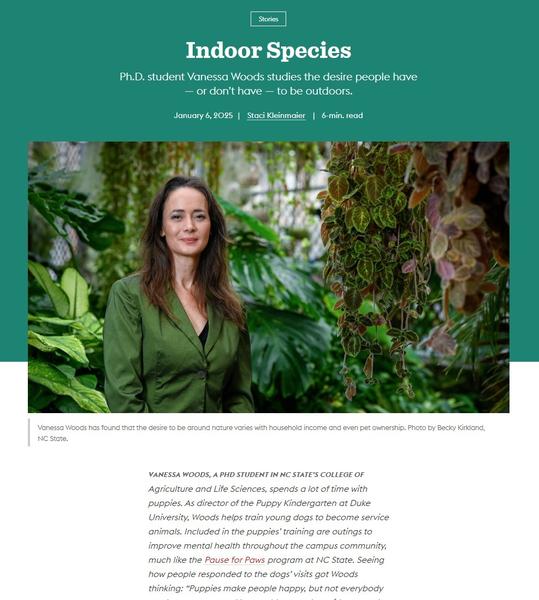
Indoor Species

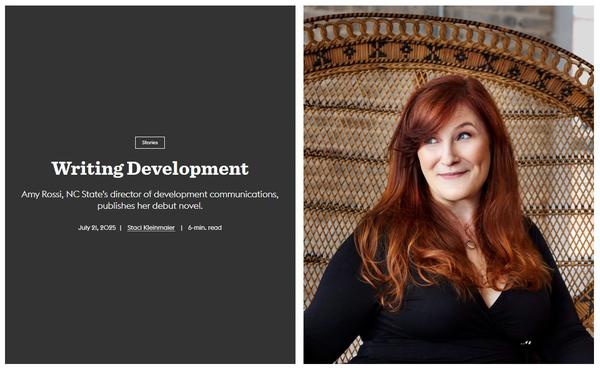
Vanessa Woods, a PhD student in NC State’s College of Agriculture and Life Sciences, spends a lot of time with puppies. As director of the Puppy Kindergarten at Duke University, Woods helps train young dogs to become service animals. Included in the puppies’ training are outings to improve mental health throughout the campus community, much like the Pause for Paws program at NC State. Seeing how people responded to the dogs’ visits got Woods thinking: “Puppies make people happy, but not everybod...
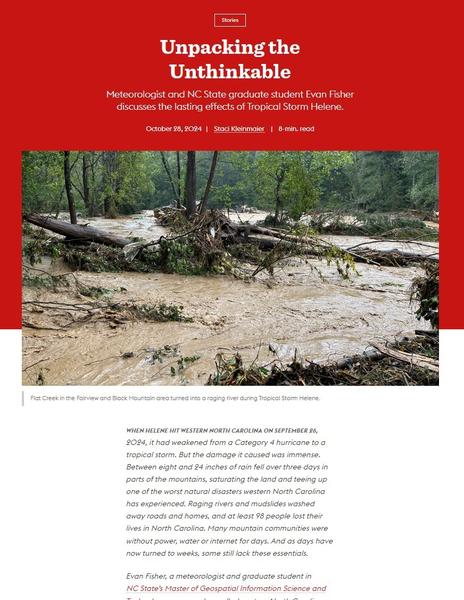
Unpacking the Unthinkable

When Helene hit western North Carolina on September 26, 2024, it had weakened from a Category 4 hurricane to a tropical storm. But the damage it caused was immense. Between eight and 24 inches of rain fell over three days in parts of the mountains, saturating the land and teeing up one of the worst natural disasters western North Carolina has experienced. Raging rivers and mudslides washed away roads and homes, and at least 98 people lost their lives in North Carolina. Many mountain communities...

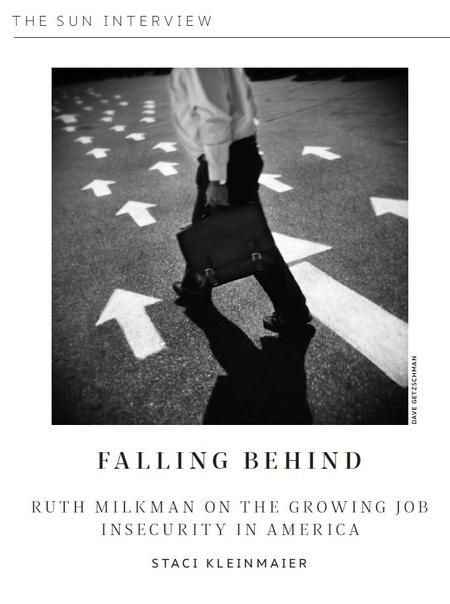
Falling Behind: Ruth Milkman on the Growing Job Insecurity in America

Not that long ago it was possible, even typical, for someone to support a family on a single income. Most jobs paid the bills, offered health insurance, funded retirement, and gave employees a sense of stability. But many households now depend on multiple incomes — sometimes from three jobs or more — and some people over sixty-five are forced to pick up second careers or gig-economy work instead of retiring.

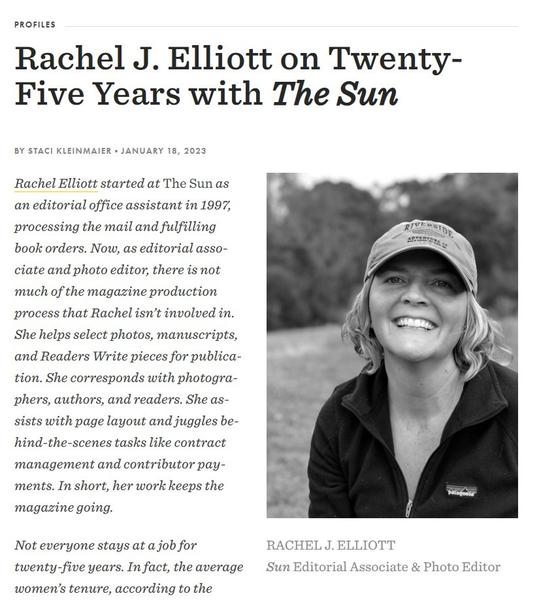
Rachel J. Elliott on Twenty-Five Years with The Sun

Rachel Elliott started at The Sun as an editorial office assistant in 1997, processing the mail and fulfilling book orders. Now, as editorial associate and photo editor, there is not much of the magazine production process that Rachel isn’t involved in. She helps select photos, manuscripts, and Readers Write pieces for publication. She corresponds with photographers, authors, and readers. She assists with page layout and juggles behind-t...

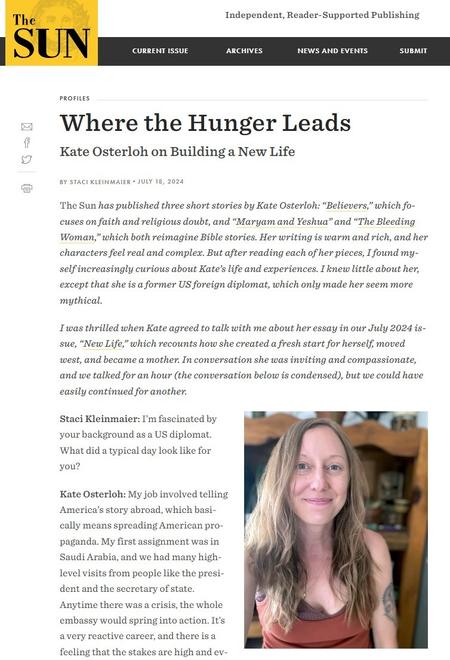
Where the Hunger Leads

The Sun has published three short stories by Kate Osterloh: “Believers,” which focuses on faith and religious doubt, and “Maryam and Yeshua” and “The Bleeding Woman,” which both reimagine Bible stories. Her writing is warm and rich, and her characters feel real and complex. But after reading each of her pieces, I found myself increasingly curious about Kate’s life and experiences. I knew little about her, except that she is a former US foreign diplomat, which only made her seem more mythical....

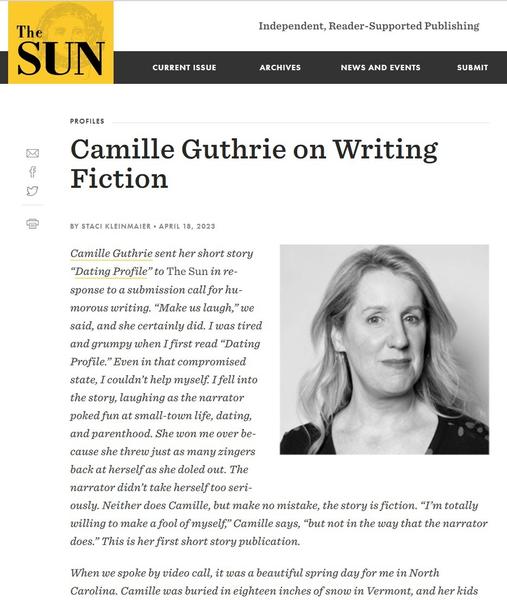
Camille Guthrie on Writing Fiction

Camille Guthrie sent her short story “Dating Profile” to The Sun in response to a submission call for humorous writing. “Make us laugh,” we said, and she certainly did. I was tired and grumpy when I first read “Dating Profile.” Even in that compromised state, I couldn’t help myself. I fell into the story, laughing as the narrator poked fun at small-town life, dating, and parenthood. She won me over because she threw just as many zingers back at herself as she doled out. The narrator didn’t take...

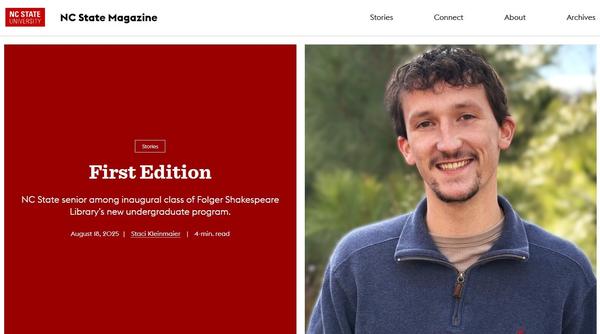
First Edition

Brennan Selcz spent the summer reading novels about the end of the world. He’s researching how post-World War II literature reflects people’s anxieties about atomic fallout. Though he started his time at NC State in STEM fields, Selcz, now beginning his senior year, is majoring in English and political science and applying both a scientific and humanist mindset to his research. “Science needs to be viewed as a humanistic endeavor,” he says. “We need to remember that what it’s doing is for the be...

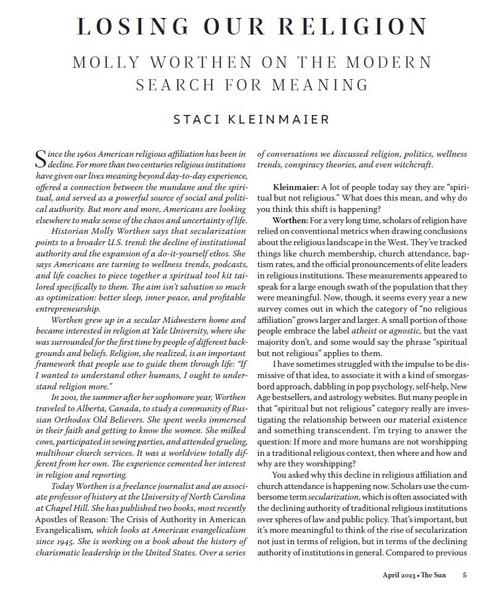
Losing Our Religion: Molly Worthen on the Modern Search For Meaning

Since the 1960s American religious affiliation has been in decline. For more than two centuries religious institutions have given our lives meaning beyond day-to-day experience, offered a connection between the mundane and the spiritual, and served as a powerful source of social and political authority. But more and more, Americans are looking elsewhere to make sense of the chaos and uncertainty of life.

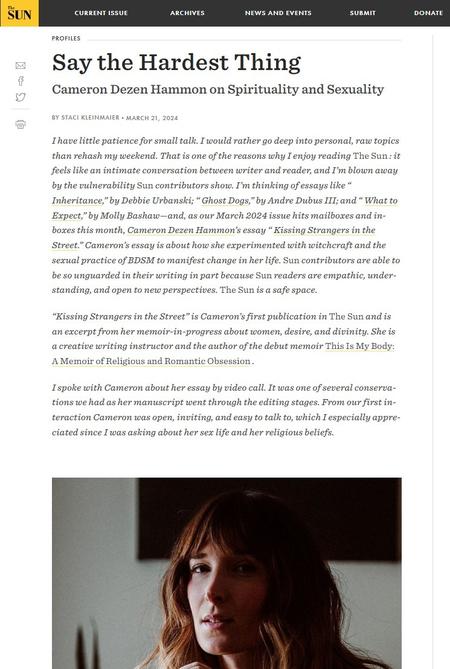
Say the Hardest Thing

I have little patience for small talk. I would rather go deep into personal, raw topics than rehash my weekend. That is one of the reasons why I enjoy reading The Sun : it feels like an intimate conversation between writer and reader, and I’m blown away by the vulnerability Sun contributors show. I’m thinking of essays like “ Inheritance,” by Debbie Urbanski; “ Ghost Dogs,” by Andre Dubus III; and “ What to Expect,” by Molly Bashaw—and, as our March 2024 issue hits mailboxes and inboxes this mo...

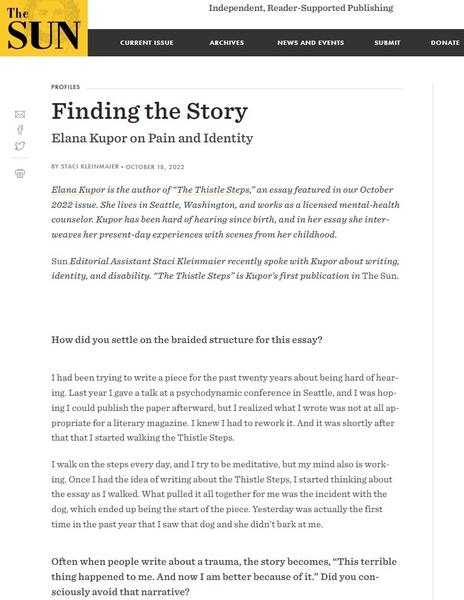
Finding the Story

Elana Kupor is the author of “The Thistle Steps,” an essay featured in our October 2022 issue. She lives in Seattle, Washington, and works as a licensed mental-health counselor. Kupor has been hard of hearing since birth, and in her essay she interweaves her present-day experiences with scenes from her childhood.

Sun Editorial Assistant Staci Kleinmaier recently spoke with Kupor about writing, identity, and disability. “The Thistle Steps” is Kupor’s first publication in The Sun.


I had...

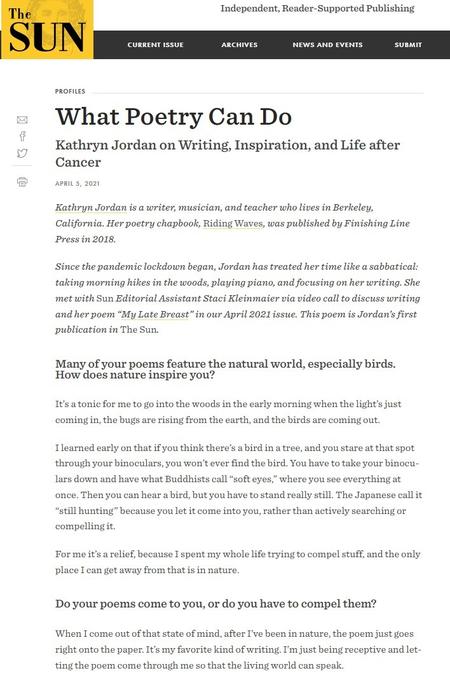
What Poetry Can Do

Kathryn Jordan is a writer, musician, and teacher who lives in Berkeley, California. Her poetry chapbook, Riding Waves, was published by Finishing Line Press in 2018.

Since the pandemic lockdown began, Jordan has treated her time like a sabbatical: taking morning hikes in the woods, playing piano, and focusing on her writing. She met with Sun Editorial Assistant Staci Kleinmaier via video call to discuss writing and her poem “My Late Breast” in our April 2021 issue. This poem is Jordan’s first...

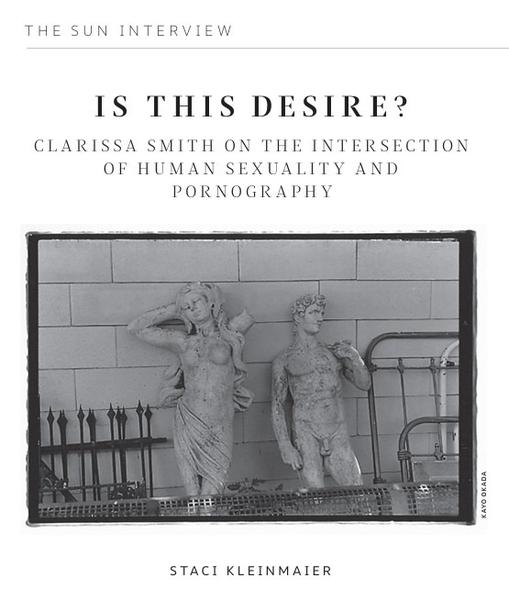
Is This Desire: Clarissa Smith on the Intersection of Human Sexuality and Pornography

When the World Wide Web went live in 1991, it was slow, text-heavy, and used primarily for information exchange among scientists. But it was free, except for the cost of a computer, a modem, and phone service, and it was vast, connecting computers and people around the globe. Users “surfed” the web, sent electronic mail, built personal websites, and shopped. And, as with all new technologies, they created, shared, and accessed pornography.

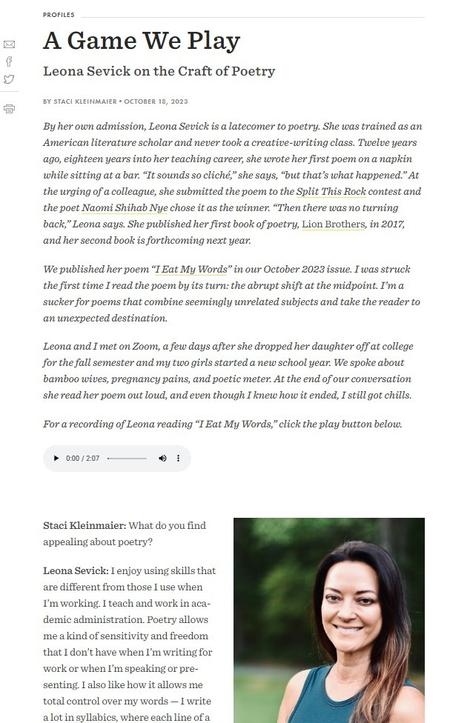
A Game We Play

By her own admission, Leona Sevick is a latecomer to poetry. She was trained as an American literature scholar and never took a creative-writing class. Twelve years ago, eighteen years into her teaching career, she wrote her first poem on a napkin while sitting at a bar. “It sounds so cliché,” she says, “but that’s what happened.” At the urging of a colleague, she submitted the poem to the Split This Rock contest and the poet Naomi Shihab Nye chose it as the winner. “Then there was no turning ba...